

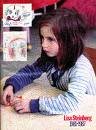
 She was thin and frail looking, with a mat of long brown hair, and freckles sprinkled across her dirty face. She held her burned arm across her chest, and held her opposite hand to her mouth like a reminder not to speak. I couldn’t help but think of Lisa Steinberg, and a heart-wrenching school picture that made the cover of People magazine after her tragic murder. This girl, whom I’ll call Tracy, had the same sad and far-away glance – the eyes holding far more trauma than her should have ever beared.
The history of abuse and neglect was staggering, including a broken cheek bone and eye socket, a displaced shoulder, infected welts, and malnutrition. The burn on her arm happened when Tracy was six, and attempting to make herself dinner. Tracy was the daughter of an alcoholic mother who spent much of her time on the streets, leaving Tracy to mostly fend for herself. The mother’s alcohol-fueled rages were the source of most of Tracy’s injuries. The other injuries, the ones Tracy tried not to remember, were inflicted by one of the mother’s boyfriends. Tracy had been in and out of foster care since birth.
Regardless of the injuries, the system which states “keeping families together” as its goal and motto, would keep giving her back. A retired social worker would be her seventh foster mother, and I would be there as Tracy was dropped off, with one grocery sack of torn and damaged possessions. I would be there, too, as the months turned into years. Tracy had found a strong advocate and ally in her seventh home; Carrie launched a vigorous battle and ultimately won.
I would like to say that Tracy turned out alright – that she went on to find happiness and all the good things in life, but I can’t. Despite the best counseling and therapists, and the loving efforts of Carrie and her extended family and friends, Tracy never accepted love or security as her right. She never thought of herself as beautiful, or worthy, and she was never able to feel connected to other people. As a teen, she began to cut into her own skin. By the age of seventeen she was dead. One long cut to each of her wrists, and a final one to her neck.
Many people, especially those who have never been close to abuse, seem to believe that the effects are fleeting. That people grow up, “get over it” and move on. That they hit a magic number, like 18, and make a total break from the terrors of their past. Many also believe that a rescue like Tracy’s almost ensures recovery; take the child from the environment, they say, nurture, teach and love them and all will be well. It’s just not that simple. The effects of child abuse, both physical and emotional, do not end with a magic number, a rescue, or an escape. It does not end when the fists stop pounding and the screaming stops, or when the hands leave the body of a child, or when the rapes end.
And it does not end with forgiveness.
In Tracy’s therapy, as well as the therapies of many other children, forgiveness of the abuser was a central theme. “Forgive others so that you may heal” is an often quoted cliche. It’s been repeated so often, for so many years, that it’s almost universally accepted as necessary to the healing process. Let’s look at what forgiveness means:
*compassionate feelings that support a willingness to forgive
* the act of excusing a mistake or offense
*a quality by which one ceases to feel resentment against another for a wrong he or she has committed
In the first definition, and by the logic of “forgive others so that you may heal”, the abused is supposed to feel some compassion toward their abuser. They are, perhaps, not only to understand that the abuse was in the past, or the result of drugs or alcohol, or the abuser’s own bad childhood, but to feel compassion for the abuser’s circumstance.
It may be one thing to feel compassion toward someone who accidentally injured us, but here we are to forgive even the most intentional acts. We are to forgive those who broke our bones in a fit of rage, or poured boiling water over our scalp, just as we would forgive those who accidentally shut the car door on our fingers. With compassion. With the attitude of “things happen” or worse, much worse – “things happen for a reason.”
In the second definition, one is supposed to stop feeling resentful against their abuser, no matter what pain was involved, and no matter how long-term the effects may be. The inability to get pregnant due to multiple sexual assaults as a child, or the lifetime loss of innocence, or the difficulty in trusting or forming close relationships, is not supposed to resented under the forgiveness paradigm. This burden of forgiveness is placed on the abused as if it’s somehow natural, or always the right thing to do, or the only way to salvation. It is not.
Andrew Vachss is one of my heroes, and one of the few professionals who understand that the forgiveness paradigm only adds one more weight to the backs of the abused. As an attorney, he has spent his career advocating for abused children, taking on hundreds of pro bono cases, as well as writing countless articles and many books. In a 1994 article in an article entitled “You Carry the Cure in Your Own Heart”, Vachss addressed the long-term effects of emotional abuse, and said that the only person the abused really has to forgive is themselves. They have to forgive themselves for whatever wrong thoughts they had about their abuse – that they deserved it, or weren’t worthy of better, or brought it on themselves.
This is the forgiveness that’s necessary to heal: the forgiveness of oneself. Any other forgiveness should not be a mandate, but an individual choice informed by what’s best for that person – and not what’s best for the abuser, or the rest of the family, or what’s expected by society.
As someone who carries a few scars from her own childhood, I know that my own resentment turned into resolve, and resolve turned into a passion for protecting the rights of children. The compassion I might have spent unwisely on an abuser turned into a productive – and often joyful – spending of energy and time on others.
I believe that, in part, Tracy turned to self-injury because she felt guilty about the resentments she held. She, who could dredge up no compassion for herself, was told in therapy that she needed to feel it for others first, and only then would her healing begin. While the physical damage done to Tracy in early childhood was extensive, I believe it was the emotional abuse that built impenetrable walls between herself and the world around her. I don’t know what might have torn those walls down, I don’t know what might have worked, but I believe the guilt that was imposed on her by the forgiveness paradigm did not help.
Editor’s Note: You can read Andrew’s article here. If you click “Home” on the page, you will have access to the library of articles and books he has written. Judith Moore is a writer who turned her bitter childhood into a life of knowledge, art, and compassion. You can read about Judith here.


21 responses so far ↓
1 A. Bar // Apr 25, 2007 at 2:16 am
Jane,
What an amazing and touching article. I whole heartedly agree with you, that forcing people to forgive in order to heal may not be a good approach. I have always felt that each person knows what is best for his or herself.
People seem to think that it is best for families to have a relationship, but that is not necessarily true. Yes, that’s great, when you have a good family. But what if you have a meiserable family? How can others presume to know, that maintaining a relationship with someone just because they are family, is what is best. Sometimes it may be best to cut harmful people out of your life, regardless of whether there happen to share blood with you or not.
Sometimes it may be best to simply try to move on, rather than going back, to forgive those who may not deserve forgiveness. And you are absolutely right, the most important forgiveness, is that which each of us owes to ourselves.
2 Danigirl // Apr 25, 2007 at 6:36 am
Jane,
Oh my friend, this is why I come to visit as often as I do. Thank you so much for sharing such wisdom and insight. Thank you for being “You”.
3 JIMI BRASHER // Apr 25, 2007 at 11:57 am
Beautiful Jane!!!! We never get over abuse… Our thoughts are always and forever a part of us. Thank you for your insight and your ability to put your thoughts into your writings. God Bless, J
4 Rosemary // Apr 25, 2007 at 1:35 pm
Dear Jane,
Your exceptional talent and courage to express it inspires me to believe that efforts to stop the prevalence and denial of child abuse will be successful. Encouraging people to give up their unfounded fears of not complying with the fourth commandment should go a long way to this end. You give an excellent voice to the findings that indicate most mental illness is caused by the failure to respect the rights of the child, and that the severity of the mental illness is commensurate with the severity of the failure to respect the rights of the child - especially for the abnormally sensitive and intelligent among us. Warm regards, Rosemary
5 Alison // Apr 25, 2007 at 2:53 pm
You are an exceptional human being and your sensitivity shines through in all your writings.
6 My mothers daughter // Apr 25, 2007 at 4:30 pm
Jane, my friend, you have once again astounded me with your writing and I couldn’t agree with you more.
I am so totally speechless that it is going to be several more readings and time spent thinking before I can even contemplate writing a worth while post……………….
7 Marnie // Apr 26, 2007 at 12:23 am
What a wonderful article. It is so obvious Anna was hurting inside from her childhood. Things she said before she died was closer to the truth as she probably knew the end was near. She had lost all hope with Daniels passing and may have even named Dannielynn Hope because she wanted her to have hope for a better future than she had.
8 Rebecca D // Apr 26, 2007 at 2:24 am
Jane you did it again! You have such a wonderful way of explaining lifes questions. I have read many books by Andrew Vacchss and most were chilling to say the least. He puts things into perspective like you do.
Just wanted to drop by and say “Thank You” for your website and all the information you have provided!!
9 Freida // Apr 26, 2007 at 8:14 am
Dear Jane Devin,
There are words that have so, very little meaning; words that rhyme, words that break the monotony and silence, words that report the news, words that make us feel…mad, happy, and sad…Rap!!!
And there are Idioms: To err is human, To Forgive Divine;
Sticks and stones can break my bones, but words can never hurt me.
Then there are words like yours; painstakingly and thoughtfully composed, not unlike a classic symphony, timeless, like scripture inspiring thought and bestowing pride.
Powerful literature is not so simple, and journalism so complex, with it’s ethics and clouded reasoning, and ribbons of truth.
I still hear you, after I’ve read you.
I believe you have a rare ability to penetrate and pierce the subconscious.
In other words, I admire you.
10 My mothers daughter // Apr 26, 2007 at 12:42 pm
Jane
After many readings and a lot of thought, Freida put into words what I am unable to do.
I have never done so much soul searching as I have since I first discovered your blog. Speechless is not an adjective that anyone would use to describe me but I find myself in that position quite regularly, thanks to your articles. I mean this in the best possible way. You get down to my raw emotions.
You have a very rare God given talent that we are so grateful to be given access to. We admire you, love you and appreciate all the hard work and research you do. We know you put your heart and soul into your articles. That is what keeps me and so many others coming here each and every day.
You are my safe haven in what can be a very cruel world and I thank you from the bottom of my heart.
Love
Margie
11 Y // Apr 26, 2007 at 10:33 pm
I’m 49, she is 82. She is a lonely old woman now. I talk to her but don’t want to. Sometimes I wish that I had Tracy’s bravery like with the knife. But it would hurt the ones that love me. I can’t do that to them.
12 Jane Devin // Apr 27, 2007 at 4:10 am
Y, your note illustrates the sadness and despair that may happen when someone has kept a toxic relationship in their life. When a relationship makes us feel so badly, but we keep it out of loyalty, or because its family, or because “that all happened in the past” — we keep ourselves locked in whatever pain that relationship brought us.
The only way a relationship can really be detoxified is when both people see that it needs healing, and both love each other enough to want that, and are brave enough to work through the healing process.
When, for whatever reason, that isn’t possible, we can only work on ourselves. Sometimes that means taking a break from that person until we’re strong enough to deal with them and our own emotions regarding them, and sometimes it means making a permanent break.
I’m sorry that this wall of pain exists between you and your mom, and that her age may make it almost impossible to come to a mutual healing. I’m glad that you have people in your life who love you, and I hope you’ll lean on them during this difficult time, and seek some counseling for your feelings of depression and guilt. You deserve better than what you’re presently feeling.
13 JIMI BRASHER // Apr 27, 2007 at 10:53 am
DEAR Y, THE PAIN THAT YOU CARRY IS THE VERY PAIN THAT WILL SET YOU FREE. YOUR IN PAIN, THE OLD LADY IS IN DENIAL. THIS WAS NOT ABOUT YOU. IT WAS ABOUT HER… SHE INFLICTED THIS UPON YOU,AND NOW, YOU OWN IT. YOU ARE PERFECT IN EVERY WAY..CREATED IN GOD’S IMAGE…I WANT YOU TO REMEMBER ONE THING… YOU ARE NEVER ALONE..NOT EVEN IN YOUR DARKEST HOUR.. YOU FEEL RAGE, GUILT AND RESENTMENT… THIS IS ALL NORMAL.. AS ALL ABUSE CHILDREN… WE FEEL RESPONSIBLE FOR WHAT HAPPENED TO US… THAT ,IN ITS SELF, IS A GREAT BURDEN. PLEASE.. IF YOU DON’T DO ANY THING ELSE, START SPEAKING OUT ABOUT THIS… OPEN UP AND TELL YOUR THERAPIST, YOUR HUSBAND, YOUR CHILDREN… JOURNALING IS VERY HELPFUL.. AND YOU HAVE US.. I GRIEVE FOR YOU!!! GOD BLESS YOU J. .
14 Freida // May 25, 2007 at 6:36 pm
Keep in mind; the term ‘rape’ can have several meanings, (i.e.: violent, destructive or abusive treatment; forcefully sending or carrying someone away).
Anna was passionate when she made her video taped accusations. She was a dramatic actress, although she never got the credit she deserved, especially for this; she was mostly made fun of, she was ‘the clown’ after all.
She would exaggerate, but not tell outright lies.
I believe her first, and most overwhelming concern, was to protect Dannielynn.
She did not want her family to gain custody or have visitation.
She wanted to destroy their credibility, to stave off an attempt to redeem themselves, to beg forgiveness (let’s just make up and love, we didn’t really mean to hurt you baby), or to make any future contact and persuasively influence Dannielynn.
She was fighting for her rights and she was fighting for Dannielynn. I remember her statement, “You will not touch my baby.â€
She knew Larry Birkhead was a lover boy (insincerely sweet and mostly naïve), and he would let Virgie and family have access to emotionally damage this child with ‘their memories,’ and to pet and ‘kiss her all over the mouth.’
Anna had already lost her first child.
I believe she was desperate and willing to say ‘anything’ to save her child from any possibility of harm.
Anna wanted only the best, and she wanted only the best for Dannielynn.
[I keep coming back to this "Forgiveness Trap" article, and thought I would tuck my comment away here, away from the most recent posts...I did make this comment on Art Harris site, too. Thanks Jane]
15 Freida // May 26, 2007 at 1:31 am
I will always feel a lack, the emptiness in my soul, a gigantic, gaping hole.
My mother had a 6th grade education, and she wasn’t capable of feeding us…and my father went to war.
My parents were children, but they did the best they could.
They were children.
Understanding patience is a virtue; we grow wise as we grow old.
Forgiveness can make this world a better place.
As our lives, like roses, unfold.
[I would like to thank a child of God, a Ms. Dani MarieBernadette, for her gift, her email, and her loving words of kindness. Thanks again...Whomever you are, Jane Devin, another angel among us.]
I need spellcheck, or you, and I did not finish high school.
16 maryst // May 31, 2007 at 7:55 am
Jane, thank you so much for this article, I don’t know why it took me so long to find it. I now understand it is best for my husband to not talk to his mom. I use to encourage it but he was stead fast in his belief it is not best. I never understood but now I do. He tried to work it out but she is not willing to acknowledge she did any thing wrong. She has the mind set to honor you parents not matter what they do to you. He is smart enough to realize he is not going against the will of God by simply choosing to live his life in peace and to do so he must leave her out of it. He is not dishonoring her just surviving. Thank you, today you made a difference in this women’s life.
17 freida // Jul 14, 2007 at 4:54 pm
Dear Jane Devin,
Suicide is the unforgivable sin, according to the Bible, or, my
translation thereof; yet I once had a friend that purposely took
her own life, at the tender age of 18, and I forgive her.
I also believe, if there is a ‘God,’ he will be forgiving, too.
She was beaten, raped, and abused beyond belief…she was
absolutely gorgeous, so absolutely physically perfect…and,
she was really sweet, I was so jealous of her.
She was beautiful and her name was Mary.
My guilt, overwhelms me at times, because I was too, afraid to
take her in, and her boyfriend was killing her.
She came to me bloodied, and so swollen, I could hardly
recognize her…
I told her to call the police, and she went back to apartment
and overdosed on prescriptions and over-the-counter medications.
She had a son when she was 15, her sister adopted him.
Love Always,
Freida
18 Freida // Aug 2, 2007 at 6:47 am
War is lack of understanding and forgiveness, give and take.
We live and learn from our mistakes or we don’t.
19 Lynda // Aug 2, 2007 at 8:48 am
Jane:
Ihave not seen this article, I was just chasing Freida around the board. If someone read this article, without intimate knowledge they would say you are being overly dramatic. For those of us that have shared experiences, it is like a breath of pure oxygen,to fill our bodies with its clean,fresh,purity. Your article should be required reading, by every Dr./ therapist /Social worker/ teacher/parent mabey if they study it long enough they will understand. It took me 45 years to understand,and start the healing.
PS: There is someone I would like to hang from his ankles, better than what I used to think. I need something that gives a little evil pleasure.
Even as much as Carrie tried she could not save Tracy, that was not her fault she had long,long time ago gone from her body,she had learned to cope by going far away, someplace safe, when it became to difficult to find that place,she took her final trip,she knew she would always be safe.
Your insight into the human condition amazes me. You have a true commitment to help in any way you can. The written word is something that can be absorbed into the subconscious until it becomes as natural any belief.
Lynda
20 Lynda // Aug 2, 2007 at 9:13 am
Freida:
You should not feel guilty, you were afraid and you were a child. There is no way you could have known what would happen. Every time you give someone on this blog a reason to feel better about themselves, or strengthen their resolve to make a change in their lives, you are honouring your friends memory. You could have lost your faith but you didn’t you stayed strong.
Freida: I think you are a very special person
Hugs
Lynda.
21 Freida // Aug 5, 2007 at 3:32 am
Lynda,
I know I am special.
I looked into the eyes of a madman, nose to nose, as he gripped my throat…and I vividly remember his sweat.
He had a big nose, and his panting reminds me of a great stallion.
He told me I was prejudice, he told me that I hated him, he was drunk and enraged…yet, I feel I was able to reason with him just a little bit, just enough for him to let me live…after all, he did let me live…I did pass out…but, he did not choke me to death.
Anyway, I told him I didn’t hate him and I think for a moment he realized I was only a kid, and that’s the truth, I never did hate them… and to this day I don’t understand why white men seemed to hate them, yet for fear and superiorty…although I was scared to death…but, I wasn’t…was I?
I tried my best to tell him, I tried the best I could…constantly arguing with my parents…
I am a survivor only because I reached out to my attacker.
However, sadly he did eventually kill.
The tire iron was the scariest part.
As Jane says….”There’s always more to a story.”